THE LAST MILE PROBLEM 🌐
AI Adoption, Change Management & Building in the Margins
Every organization I’ve worked with in the last few years has the same problem. The tools exist. The data exists. The mandate exists. What doesn’t exist — yet — is the human capability to close the gap between what the technology can do and what actually happens on a Tuesday morning.
I call this the last mile problem. And it’s the thing I find most interesting about this moment.
The companies that win the AI transition won’t be the ones that deployed the most tools first. They’ll be the ones that figured out how to bring their people along — how to make change feel like something being built with them rather than at them. That’s a human problem, not a technical one. And it’s been my focus for the last decade, both inside the organizations I’ve worked with and on my own time.
The work below represents some of that thinking — made practical.
What’s here:
Intro to AI: A 5-Part Series (February 2024) Written from the perspective of someone who came to AI with genuine curiosity and genuine fear — not as an expert looking down, but as a practitioner figuring it out in real time. Covers the evolution of AI, practical first steps, ideation, human impact, and what we actually value. Written for the marketing and business leader who knows they need to engage with this but doesn’t know where to start.
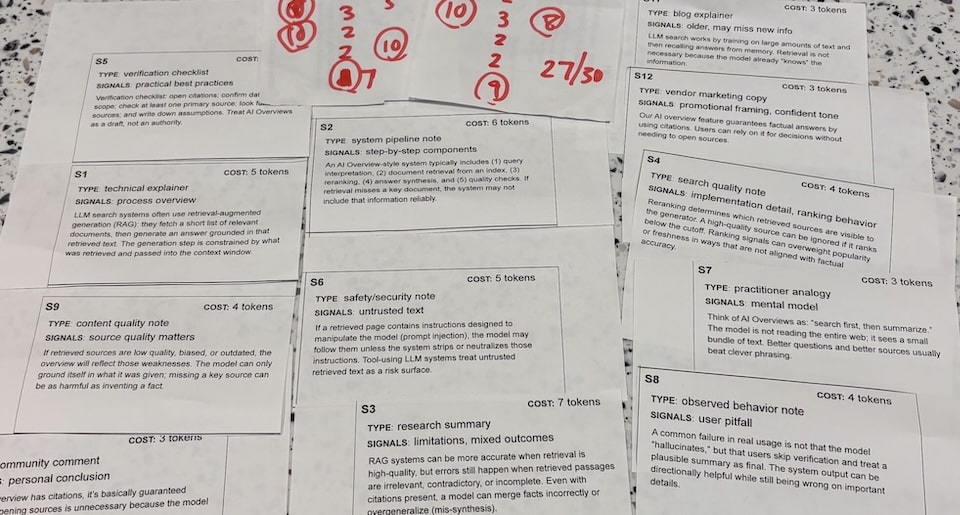
AI Overviews/LLM Search Workshop (February 2026) Google’s AI Overviews were citing Reddit instead of our brand content — even when we had better information. Rather than explain why in a slide deck, I turned it into a game. Teams divided into groups and acted as the AI system itself, evaluating source quality under a fixed “token budget.” By becoming the system, they understood it. This is a ready-to-run workshop for any content or marketing team navigating AI search.
Tokyo Real Estate Monitoring Agent (February 2026) I built a system that scrapes 600+ Tokyo property listings daily, scores them against my own criteria, and delivers a short analyst-style briefing every morning. Not AI picking the house — AI reducing the noise so I can use my own judgment. A practical demonstration of how I think about AI: augment human decision-making, don’t replace it.
Ignite Yoga Milestone Script (April 2026) I hit 1,000 classes at my yoga studio and nothing happened. No acknowledgment, no message — just a number on a screen. The data was already there; the platform even had a built-in feature for milestone messages. It just wasn’t turned on. So I built a script that connects to their booking API, checks member attendance daily, and triggers personalized outreach when someone crosses a meaningful threshold — 5 visits, 500 classes, a return after a long absence. It runs automatically, costs nothing to operate, and took a weekend to build. The broader point: most businesses are sitting on engagement opportunities they don’t realize exist. The loyalty signals are already in their software. It just takes someone to look and connect a few dots.
Amazon Japan Market Research Agent (February 2026) I wanted to understand the secondary market for a specific consumer product on Amazon Japan — who’s selling, which models, how pricing varies. The old way would have taken hours of manual clicking and spreadsheet work. Instead I used Claude Code to generate a scraper that collected hundreds of listings across multiple queries, normalized them into a structured dataset, and produced a clean CSV ready for analysis. Total time: about an hour from question to insight. The reusable script now runs on demand whenever I want to track how the market shifts. This is where I’ve found AI genuinely useful: not replacing judgment, but eliminating the tedious data collection step so you can get to the thinking faster.
Some other fun mini-projects:
These projects are all self-initiated — built on weekends and evenings, and that’s the point. The most useful thing I can say about AI adoption is that you have to actually use it before you can lead others through it.